Brake and Clutch Bundaberg: Warning Signs You Shouldn’t Ignore

Fischer Automotive Client • 21 May 2025

Brake and Clutch Bundaberg: Signs You Need a Mechanic Now

Brake and clutch issues are one of the most common reasons people visit a mechanic in Bundaberg. These systems take a beating over time, especially if you’re dealing with daily commutes, stop-start traffic, or weekend towing. While some signs of wear are obvious, others are more subtle and easy to ignore.

But letting things slide could mean the difference between a quick repair and a roadside breakdown.

This guide covers the warning signs that your brake or clutch might be about to fail, what to expect during a repair, and how a regular car service in Bundaberg can help you stay ahead of bigger problems.


Why Brake and Clutch Issues Happen


Clutches and brakes are wear-and-tear items. No matter how careful a driver you are, these parts will degrade over time. The clutch connects the engine to your wheels. Your brakes bring you safely to a stop. Both are essential to keeping control of your car.

Heat, friction, and age all take a toll. Add in driving habits, terrain, and vehicle weight, and you get a good idea of why no two cars wear the same. That’s why it’s important to listen to your vehicle and look for the signs.

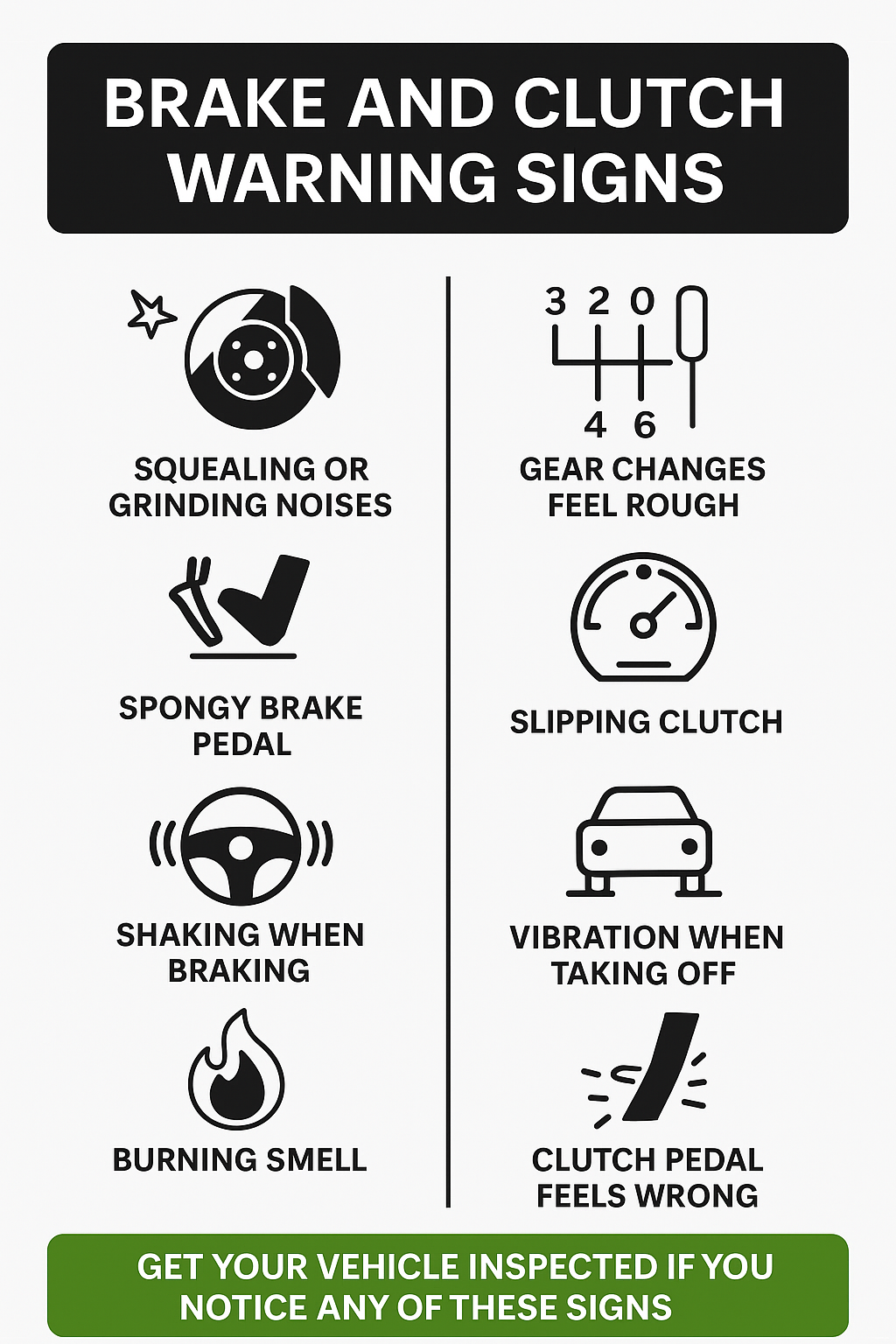
Brake and clutch warning signs infographic with the most common warning signs.


Common Signs Your Brakes Are Failing

Your brakes keep you, your passengers, and everyone else on the road safe. If they’re starting to fail, you’ll usually notice. Here’s what to watch for:

  • Squealing or grinding noises
    This often means your brake pads are worn and starting to hit metal. That’s not just noisy, it’s unsafe.

  • Spongy brake pedal
    If the pedal feels soft or sinks to the floor, air or moisture may have entered the brake lines. You’ll need this checked immediately.

  • Shaking when braking
    Vibrations or shuddering when you slow down may indicate warped rotors. It’s a sign your brakes are struggling to function properly.

  • Pulling to one side
    If your car veers left or right when braking, a calliper or brake line may be the issue.

  • Burning smell after braking
    That sharp chemical scent? Your brakes may be overheating, especially if you’ve been driving downhill.

If you notice any of these, it’s time to visit your local mechanical expert for brake and clutch Bundaberg inspections. Brakes don’t fix themselves.


Signs of a Failing Clutch

The clutch is a more complex part of your vehicle. It’s responsible for transferring power from the engine to the wheels. A failing clutch will usually show signs before it completely gives up. Here’s what to look for:

  • Gear changes feel rough
    If shifting feels stiff or clunky, your clutch could be worn or misaligned.

  • Slipping clutch
    When the engine revs increase but the car doesn’t accelerate, the clutch could be slipping. That means it’s not engaging properly.

  • Noisy clutch pedal
    Clicking or squeaking sounds when pressing the clutch can be signs of a worn release bearing.

  • Vibration when taking off
    This can point to a damaged clutch disc or flywheel.

  • Clutch pedal feels wrong
    Too soft, too firm, or sticky pedals may all suggest the hydraulic system or cable needs attention.

When in doubt, bring your vehicle to a specialist in brake and clutch Bundaberg services. Ignoring the signs only leads to more damage.


Why You Shouldn’t Wait

We get it. Sometimes it’s tempting to wait. That noise might go away, or the vibration might be “normal.” But when it comes to brake and clutch problems, delays can be dangerous.

Brakes that don’t respond properly can fail when you need them most. A worn clutch can leave you unable to accelerate, shift, or even start your car.

And the longer you wait, the higher the repair cost. Minor issues can become major repairs fast, especially if they affect other systems in the car.

A qualified Bundaberg mechanic will spot these problems early and offer solutions before they become emergencies.


How a Mechanic in Bundaberg Will Help

When you take your car in for brake or clutch concerns, the process usually starts with a road test and inspection. Depending on the issue, here’s what your mechanic may check:

  • Brake pad thickness

  • Rotor surface condition

  • Brake fluid level and condition

  • Clutch cable or hydraulic line wear

  • Clutch pedal travel

  • Transmission response under load

You’ll get a breakdown of what’s wrong, what needs fixing now, and what can wait. A trusted mechanic in Bundaberg won’t push repairs you don’t need.


What’s Involved in a Brake or Clutch Repair?

Every job is a little different. Some cars just need new pads or fluid. Others might need a full clutch replacement. Here’s a general idea of what’s involved:

  • Brake repairs may include replacing pads, machining rotors, flushing fluid, or fixing callipers.

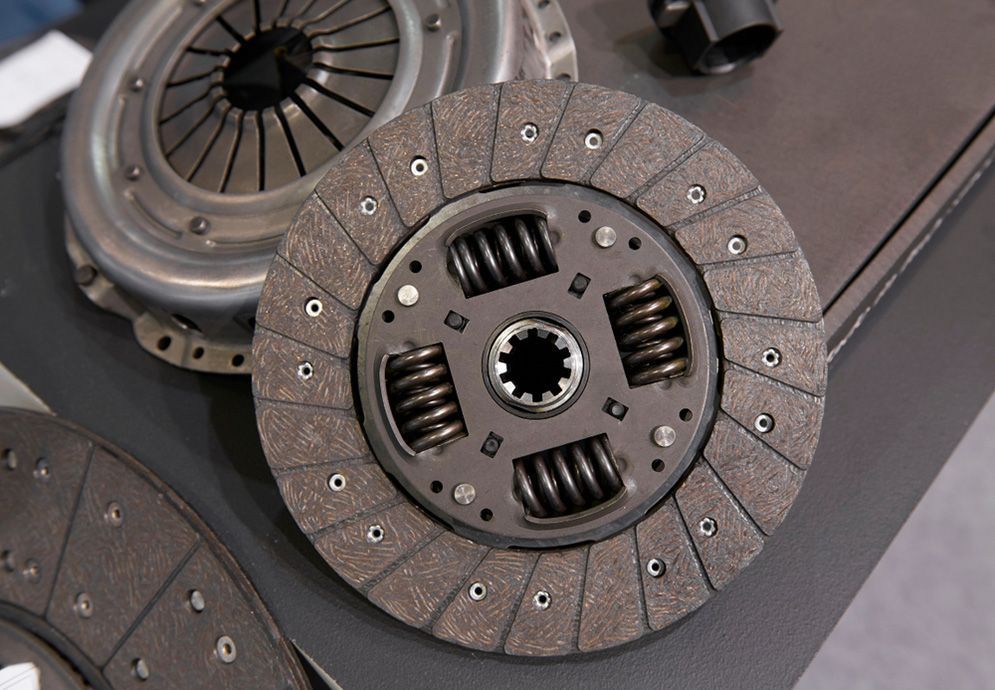
  • Clutch repairs might involve a new clutch disc, pressure plate, release bearing, or even flywheel resurfacing.

If caught early, you might get away with a quick fix. If left too long, you may need to replace multiple parts at once.


Why Regular Car Service in Bundaberg Matters

The best way to avoid sudden brake or clutch problems? Stay on top of your servicing schedule.

A proper car service will include checks on both systems. Mechanics can detect minor wear, top up or flush fluids, and give advice on when to book replacements. This keeps your car running smoothly and keeps you safe on the road.

Servicing also protects your resale value. A well-maintained vehicle shows that you’ve cared for the important stuff, not just the paintwork.


Final Thoughts

Your car's brakes and clutch are essential to safe, smooth driving. If you’ve noticed grinding noises, poor gear changes, or strange pedal behaviour, don’t ignore it.

Bring your car to a trusted Bundaberg mechanic for a full check-up. At Fischer Automotive, we handle brake and clutch Bundaberg inspections, repairs, and replacements every day. We’re here to keep you on the road and off the back of a tow truck.

Book your next car service in Bundaberg and drive with confidence.



by Fischer Automotive Client 20 April 2026
Short answer: no. But you'd be forgiven for thinking otherwise. If you've ever bought a new car, you've probably felt a quiet pressure to take it back to the dealership every time a service is due. The logbook has a box for their stamp, the salesperson mentioned it at handover, and somewhere in the back of your mind there's a worry that going elsewhere might void your warranty. It's one of the most persistent myths in Australian motoring, and it costs drivers a lot of money every year. Here's what's actually going on, and what your rights are. The Warranty Myth, Debunked Under Australian Consumer Law, you are legally entitled to have your car serviced by any qualified, independent mechanic without voiding your manufacturer's warranty. The Australian Competition and Consumer Commission has been explicit about this for years. Any licensed repairer can carry out your logbook service, stamp your book, and your warranty remains completely intact, as long as the work is done to manufacturer specifications using quality parts. The ACCC has also acknowledged that some manufacturers and dealerships have used confusing language in logbooks and service manuals to create the impression that dealer servicing is mandatory. It isn't. If a warranty claim is ever declined solely because your car was serviced outside a dealership, that's actually a problem the ACCC wants to hear about. There is one exception worth knowing: if you've purchased a separate extended warranty through the dealer (not the standard manufacturer's warranty that came with the car), that extended warranty may have its own conditions requiring dealer servicing. It's worth checking the fine print on any add-on warranty products. But your standard factory warranty? That's protected regardless of where you service. What a Logbook Service Actually Is A logbook service follows the specific maintenance schedule your vehicle's manufacturer has set out for that make and model. It's not a one-size-fits-all service. Different cars have different intervals, different fluid specifications, different components that need checking at different mileage points, and a proper logbook service accounts for all of that. The difference between a logbook service and a standard service is documentation and precision. A standard service covers the basics: oil, filters, a general check. A logbook service works through every item on the manufacturer's schedule for that particular interval, records it properly, and gets stamped in your logbook. That record matters for two reasons: it keeps your warranty valid, and it protects your car's resale value. A complete, stamped service history is one of the first things a buyer or dealer looks at when assessing a used vehicle. Why It Matters More Than People Realise Skipping logbook services, or substituting them with cheaper basic services, might save a bit of money in the short term. Over time though, the costs compound in a few ways. Manufacturer-specified maintenance exists because engineers have worked out exactly what a vehicle needs at each interval to perform correctly and last the distance. When those intervals get ignored or done incompletely, small issues that would have been caught early become larger ones. Worn brake fluid absorbs moisture and loses effectiveness. Timing belts stretch beyond spec and then break. Coolant degrades and the system starts running hot. None of these announce themselves loudly until they've already become a real problem. Then there's resale. A car with a full, properly stamped service history is worth noticeably more than the same car without one. Buyers pay attention to this, and so do dealers when they're valuing a trade-in. The money you save skipping services rarely offsets what you lose when it's time to sell. How to Know When Your Logbook Service Is Due Your logbook will tell you. Most manufacturers schedule services based on either a kilometre interval (commonly every 10,000 or 15,000 km depending on the vehicle) or a time interval (often every 12 months), whichever comes first. Both matter. A car that's done low kilometres but sat for 18 months still needs a service, because fluids and seals deteriorate over time regardless of how much the car has moved. If you're not sure where your car is in its service schedule, a good mechanic can check the logbook and the vehicle's current condition and advise you from there. What to Expect at Fischer Automotive At Fischer Automotive in Bundaberg, logbook servicing is one of the most common jobs we do. We follow the manufacturer's schedule for your specific vehicle, use quality fluids and parts that meet the required specifications, and document everything properly in your logbook. Your warranty stays valid, your service history stays clean, and you're not paying dealership prices to get it done. We service all makes and models, including cars, SUVs, 4WDs, and light trucks, and we're straightforward about what's needed and what it'll cost before we start. If we spot something during the service that needs attention, we'll tell you clearly and let you make the call. Give us a ring to book your next logbook service, or drop into our workshop on Enterprise Street. 
by Fischer Automotive Client 17 March 2026
Need a Safety Check? Bundaberg Mechanic Guide
by Fischer Automotive Client 12 February 2026
Clutch Lifespan Guide: When to Replace Your Clutch
by Fischer Automotive Client 18 January 2026
Oil & Filter Change
by Fischer Automotive Client 15 December 2025
The Myth That Costs Car Owners Thousands
by Fischer Automotive Client 12 November 2025
Beyond the Obvious: What Really Fails in Bundaberg Summers
by Fischer Automotive Client 19 October 2025
The Electrical Issues Most Drivers Ignore Until It's Too Late
22 September 2025
Why Bundaberg Summers Test Your Car's Limits
by Fischer Automotive Client 18 August 2025
Why Regular Car Maintenance Matters More Than You Think
by Fischer Automotive Client 8 July 2025
How to Keep Your Car in Top Condition Through Bundaberg’s Changing Seasons